Understanding the Blockchain Trilemma
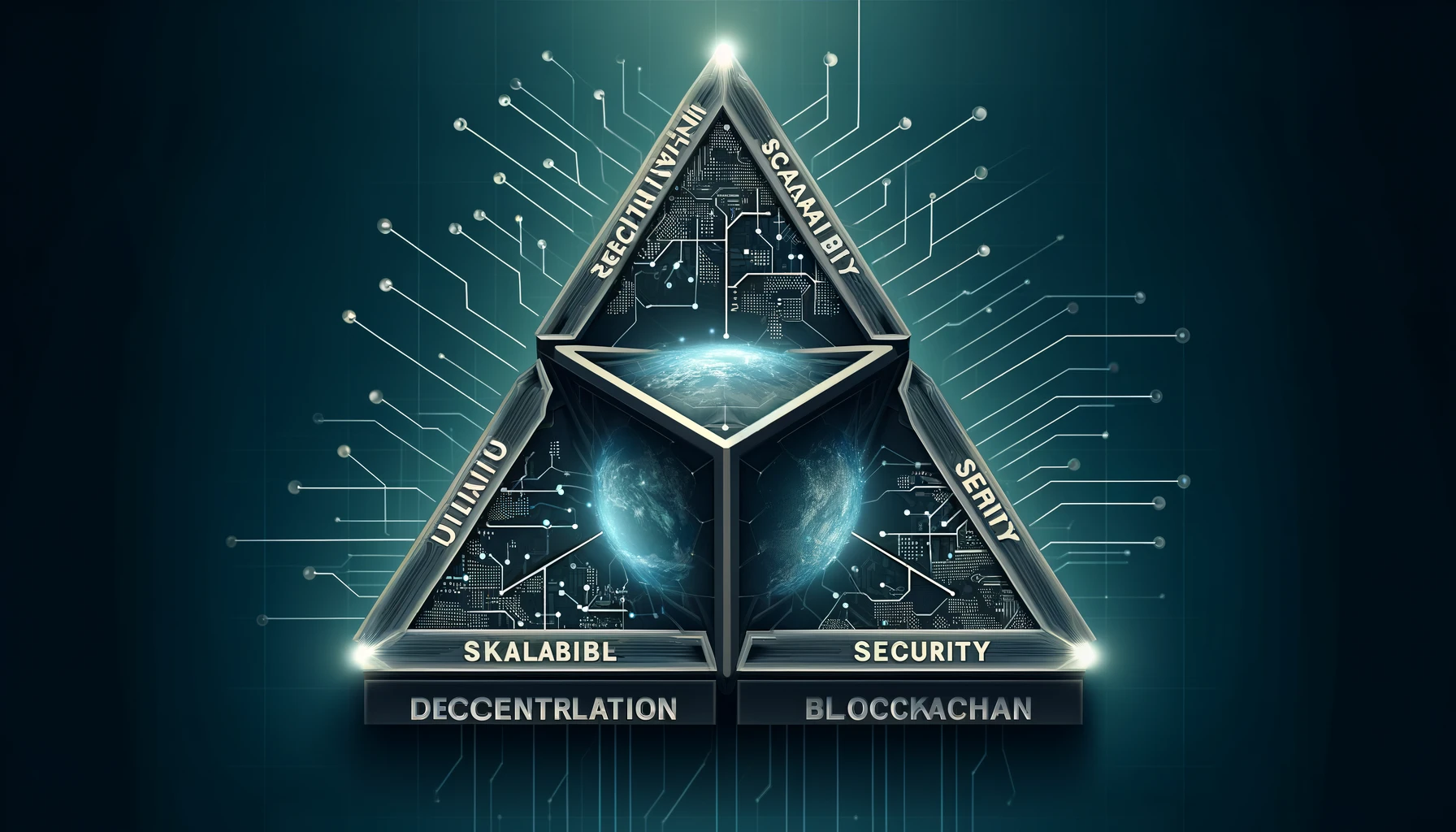
The Blockchain Trilemma is a concept that describes the challenges faced in achieving three key properties in a blockchain network: decentralization, scalability, and security. It suggests that a blockchain system can only at most excel in two of these areas at the expense of the third. This trilemma poses significant challenges for developers as they strive to create balanced systems that offer equitable performance across these dimensions.
Key Components of the Blockchain Trilemma:
- Decentralization: The distribution of control and operation across a network, preventing a single point of failure or control.
- Scalability: The ability of the system to handle a growing amount of work or transactions in a capable manner.
- Security: The protection of the network against fraud, attacks, and errors, ensuring all transactions are safely recorded.
Examples and Discussion
1. Bitcoin
- Focus: Decentralization and Security
- Challenge: Scalability
- Example: Bitcoin is highly decentralized and secure, but it can only process 7 transactions per second due to its block size and time, making it less scalable compared to traditional payment systems like Visa.
2. Ethereum
- Focus: Decentralization and Security
- Challenge: Scalability
- Example: Similar to Bitcoin, Ethereum faces scalability issues. Despite supporting smart contracts and decentralized applications, it struggles with network congestion and high transaction fees during peak usage.
3. EOS
- Focus: Scalability and Security
- Challenge: Decentralization
- Example: EOS operates with a delegated proof-of-stake mechanism which improves transaction speed and scalability (up to 10,000 transactions per second). However, this model relies on a limited number of block producers, which reduces its level of decentralization.
4. Solana
- Focus: Scalability and Security
- Challenge: Decentralization
- Example: Known for its high throughput and fast processing times, Solana can handle over 65,000 transactions per second. Yet, its highly performative nature comes at the cost of less decentralization due to its consensus mechanism which requires more computational power, limiting participant diversity.
Addressing the Trilemma
Several solutions and ongoing research aim to balance these three aspects better:
- Layer 2 Solutions: Technologies like Lightning Network for Bitcoin and Plasma for Ethereum aim to improve scalability through off-chain transactions while maintaining decentralization and security.
- Sharding: This technique divides the blockchain network into smaller pieces or "shards" that can process transactions in parallel, purported to enhance scalability without compromising security or decentralization.
Conclusion
The blockchain trilemma continues to be a central issue in the development of blockchain technology. As the field evolves, new innovations and approaches are being tested to create more balanced systems. The ultimate goal is to develop a blockchain that effectively balances decentralization, scalability, and security, paving the way for broader adoption and more robust applications.