Layer 2 Solutions: Enhancing Blockchain Efficiency and Scalability
Introduction: Scaling Blockchains with Layer 2 Solutions
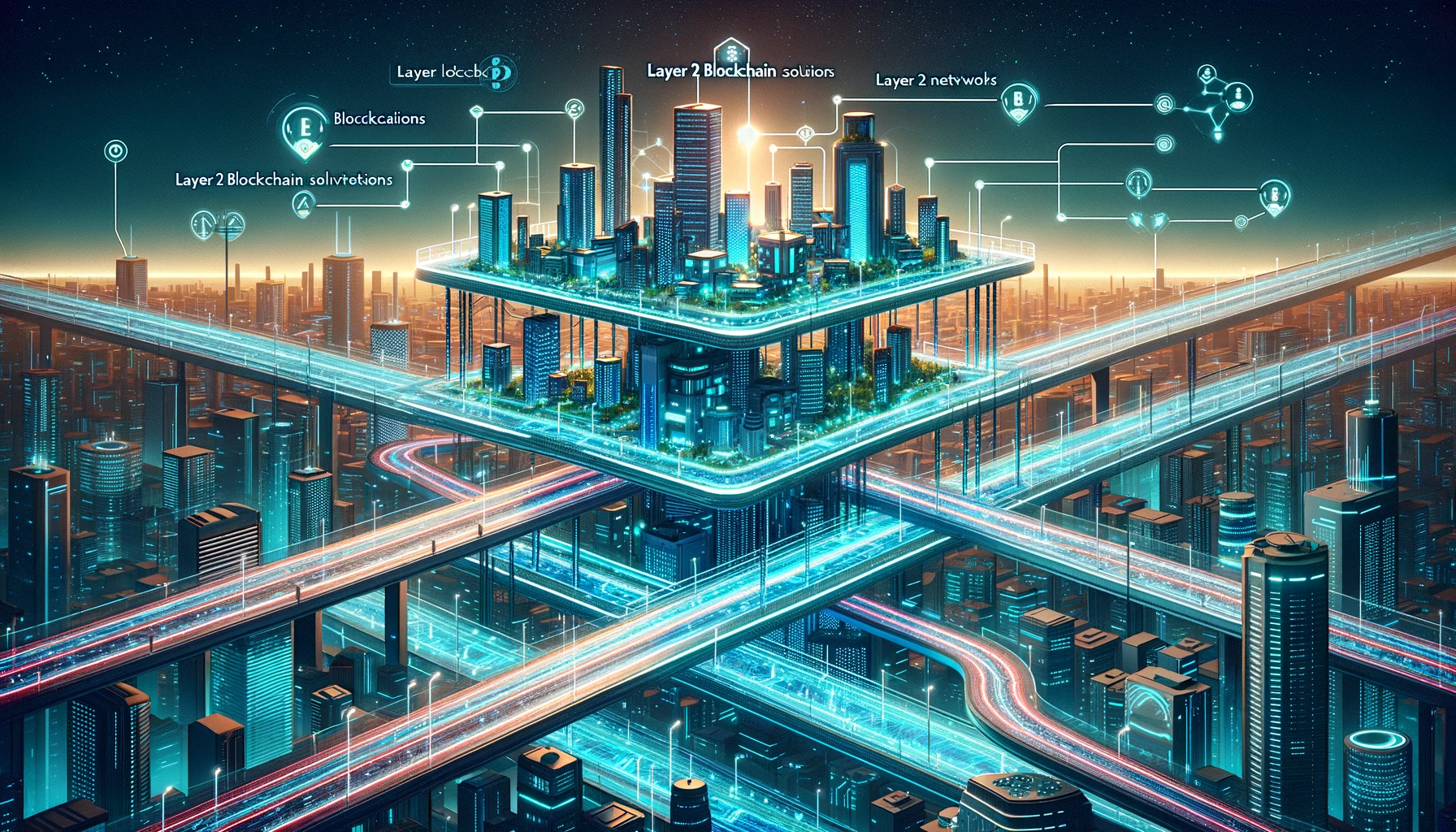
As the digital world continues to embrace blockchain technology, the need for enhanced scalability and faster transaction speeds becomes increasingly critical. Layer 2 solutions are akin to adding express lanes to a congested highway, enabling faster and more efficient traffic flow without the need to widen the road itself.
What Are Layer 2 Solutions?
Layer 2 solutions are technologies developed on top of a blockchain—referred to as Layer 1—to improve its scalability and efficiency. These solutions handle transactions off the main chain, thereby reducing the burden on the network and allowing for quicker and cheaper transactions.
The Purpose of Layer 2 Solutions
- Scalability: To handle more transactions per second than currently possible on Layer 1.
- Speed: To reduce transaction times, making blockchain technology more practical for everyday use.
- Cost: To lower transaction fees, which can become prohibitively expensive on congested networks.
How Layer 2 Solutions Work
- Off-Chain Transactions: Most Layer 2 solutions process transactions away from the main blockchain, settling final account balances on-chain periodically.
- Channels: Create pathways between users or between users and service providers to facilitate multiple transactions, which may later be settled as a single operation on the blockchain.
Examples of Layer 2 Technologies
- Lightning Network: Primarily used with Bitcoin, it allows for fast and low-cost transactions by creating payment channels between users.
- Plasma: Developed for Ethereum as a framework for creating “child” blockchains that report back to the main “parent” blockchain.
- Rollups: Aggregate multiple transactions into a single one that is processed on the main blockchain, significantly reducing the load on Layer 1.
The Significance of Layer 2 Solutions in the Blockchain Ecosystem
- User Experience: Improves user satisfaction by providing faster responses and lower costs.
- Adoption: Makes blockchain applications, like dApps and smart contracts, more practical and appealing to a broader audience.
- Innovation: Encourages the development of new applications and services that were previously not viable due to performance constraints.
Challenges Facing Layer 2 Solutions
- Complexity: Adding a new layer can introduce new technical challenges and potential points of failure.
- Security: Ensuring that Layer 2 solutions are as secure as the underlying blockchain.
- Interoperability: Making different Layer 2 solutions work seamlessly with each other and with Layer 1 blockchains.
Future Directions: The Evolution of Layer 2 Solutions
- Integration: Increased efforts to integrate multiple Layer 2 solutions, providing users with more options and flexibility.
- Standardization: Development of industry standards to ensure compatibility and security across different Layer 2 solutions.
- Regulation: Adapting to legal frameworks that may evolve to address these new technologies.