Play-to-Earn Revolution: Changing the Game in Digital Entertainment and Earnings
Introduction: Unlocking New Realms of Opportunity with Play-to-Earn Games
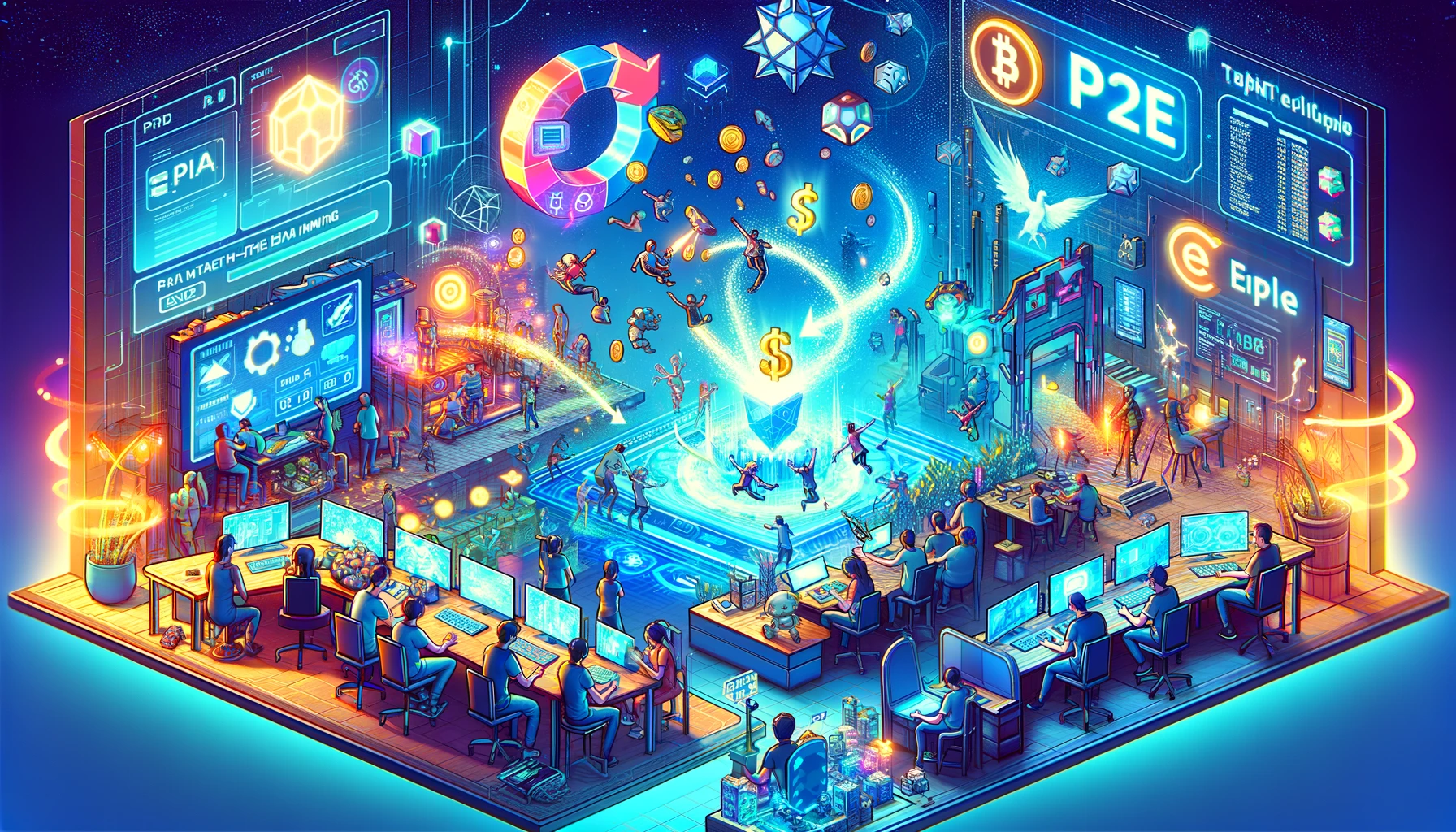
The Play-to-Earn (P2E) model is revolutionizing the gaming industry much like streaming services transformed television. P2E platforms not only entertain but also offer real economic incentives to players by integrating blockchain technology into the core gameplay. This model allows players to earn tangible rewards, usually in the form of cryptocurrency or digital assets, for their gaming efforts and skills.
Understanding Play-to-Earn (P2E) Models
P2E games represent a paradigm shift in gaming, where the traditional pay-to-play and free-to-play models are enhanced with blockchain technology to create economies that reward player engagement and contributions. These rewards can be in-game assets, such as unique characters, items, or tokens that have real-world value.
The Mechanics of Play-to-Earn Gaming
- Asset Ownership: Players have true ownership of in-game assets represented as Non-Fungible Tokens (NFTs), which they can trade or sell.
- Earning Mechanisms: Players earn through mechanisms such as competing in battles, completing quests, or trading in-game items in open marketplaces.
- Blockchain Integration: Transactions and ownership are recorded on a blockchain, ensuring transparency and security.
Examples of Popular Play-to-Earn Games
- Axie Infinity: Players breed and battle fantasy creatures called Axies, with the potential to earn cryptocurrency rewards.
- Decentraland: A virtual reality platform where players can build, own, and monetize their gaming experiences.
- The Sandbox: A community-driven platform where players can create, own, and monetize their virtual experiences.
Benefits of Play-to-Earn Models
- Financial Incentives: Players can earn a significant income, making gaming a potential career rather than just a hobby.
- Increased Player Engagement: Financial rewards encourage deeper and more consistent engagement with the game.
- Economic Empowerment: Provides opportunities for people in low-income regions to earn money in ways that were not possible before.
Challenges and Considerations in Play-to-Earn Games
- Market Volatility: The value of in-game assets and currencies can be highly volatile.
- Regulatory Uncertainty: The legal landscape for P2E games and earnings is still developing and varies by region.
- Sustainability: Questions remain about the long-term viability and environmental impact of P2E models, especially those that consume significant computational power.
The Future of Play-to-Earn Gaming
As technology and regulatory frameworks develop, the future of P2E gaming looks promising with potential advancements such as:
- Cross-Game Asset Utilization: Players could use assets from one game in another, enhancing interoperability across platforms.
- Enhanced Economic Models: More sustainable and balanced economic models could evolve to ensure the longevity and fairness of P2E games.
- Mainstream Adoption: As P2E games become more user-friendly and accessible, they may reach a broader audience and integrate more seamlessly with traditional gaming markets.